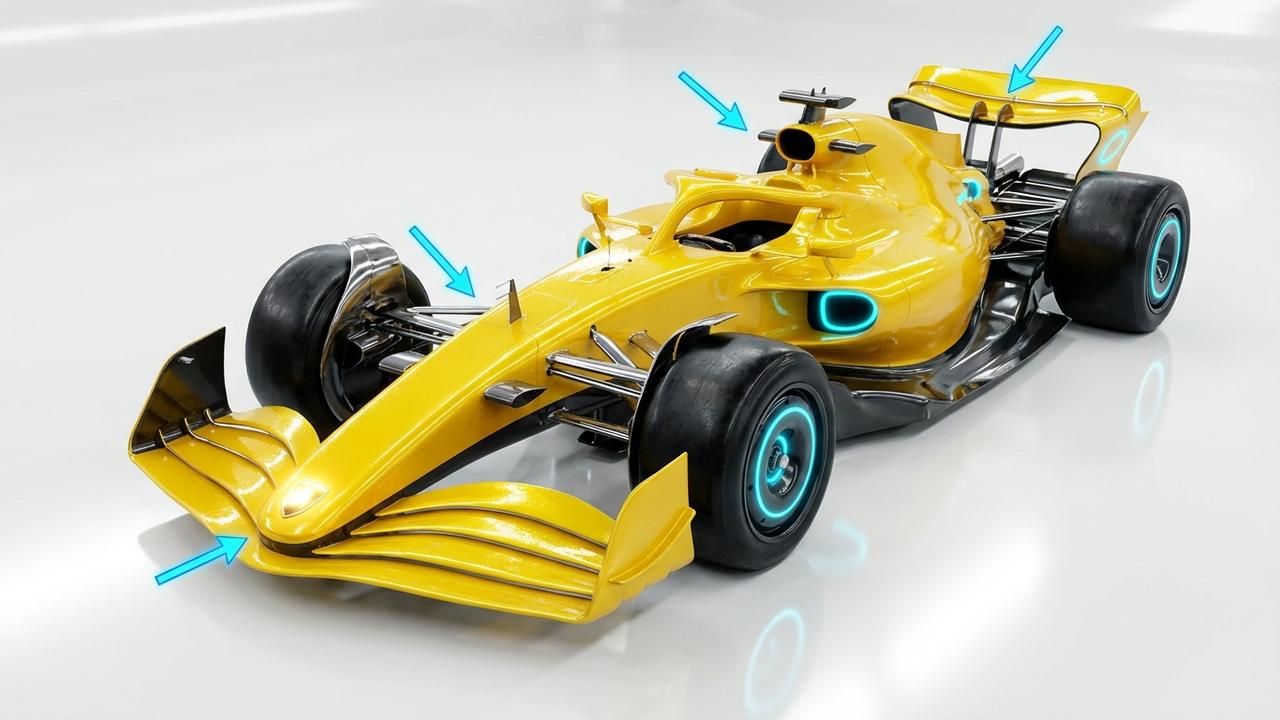
The 2026 F1 Tweaks Rules Unveiled in the USA have landed at a pivotal moment for teams, engineers and American fans planning trips to Albert Park in Melbourne. Changes announced at the U.S. press events are not just technical bulletins for the paddock — they ripple into broadcast schedules, ticketing priorities and even the kinds of high-performance street cars that interest U.S. customers. If you follow Formula 1 from the U.S., whether you attend a race at Circuit of The Americas or watch from home, understanding these tweaks matters.
2026 F1 Tweaks Rules Unveiled in the USA: What to Expect at the Australian Grand Prix
When the FIA and race promoters bring new regulations to the public, the first big test usually comes at marquee races like the Australian Grand Prix. The 2026 F1 Tweaks Rules Unveiled in the USA will influence how teams present their cars to the world at Albert Park, and how drivers adapt to updated aerodynamic boundaries and sprint race formats.
Expect to see different aerodynamic setups on the grid in Melbourne compared with last season. Teams often use early-season rounds to try different philosophies, and with rule clarifications announced in the U.S., some will arrive in Australia with fresh wings, floor edges and cooling solutions. For U.S. viewers, that means more on-track variability and storylines to follow.
How the 2026 F1 Tweaks Rules Unveiled in the USA Change Aerodynamics and Ground Effect
A central focus of the recent announcements is aerodynamic stability and ground-effect management. Technical directives released after the U.S. unveil aim to close loopholes that created excessive downforce gains for certain car concepts last year. The 2026 F1 Tweaks Rules Unveiled in the USA specifically address diffuser geometry, floor step tolerances and the permissible use of wake-manipulating winglets.
For engineers in the U.S.-based factories and R&D; centers, these tweaks change development roadmaps. Teams working with U.S. suppliers — composites shops in North Carolina, wind tunnel collaborators in Ohio, aerodynamicists in California — will pivot to rework CFD runs and align suspension kinematics to the updated ground-effect envelope. That technological tug-and-pull can influence what trickles down to performance road cars.

2026 F1 Tweaks Rules Unveiled in the USA: Power Unit and Fuel Flow Adjustments
Alongside aero constraints, the U.S. announcements included refinements to power unit deployment and fuel-flow monitoring. The 2026 F1 Tweaks Rules Unveiled in the USA clarify how energy recovery systems can be used in qualifying and sprint stints, and impose stricter telemetry checks for fuel mass flow to ensure parity.
These changes are significant for manufacturers with a foothold in both F1 and the American market. For example, when global OEMs participating in F1 develop road-going hybrids or performance plug-in models, the race-derived lessons on battery thermal management and energy recuperation often migrate to production cars. U.S. consumers shopping for high-efficiency performance cars should watch how manufacturers reinterpret F1-derived hybrid strategies for street use.
2026 F1 Tweaks Rules Unveiled in the USA and the Budget Cap — Team Strategies
Budget cap enforcement and interpretation are evergreen topics in the paddock. The 2026 F1 Tweaks Rules Unveiled in the USA included clarifications on what counts as aerodynamics development versus homologated updates that fall outside the cap. That distinction reshapes mid-season upgrade plans and can widen or tighten the gap between big-spend outfits and smaller independent teams.
For U.S. fans following the Constructors’ Championship, these clarifications make the season narrative more predictable in some ways. Teams that can optimize within the clarified rules will show improved mid-season form, while others must be creative with allocation of resources. The result is more strategic racing and a clearer storyline per race weekend.
Practical buying tips for American fans after 2026 F1 Tweaks Rules Unveiled in the USA
Beyond the track, the 2026 F1 Tweaks Rules Unveiled in the USA have indirect implications for the U.S. auto market. If you’re a fan considering a performance purchase or planning to upgrade your weekend car, these rules hint at areas of tech that will grow in importance: energy recovery, thermal management, lightweight composites and suspension tuning for high-cornering loads.

Here are practical tips for U.S. buyers keeping one eye on F1 tech trends:
- Prioritize models with sophisticated hybrid systems — look for cars with proven regenerative braking and thermal battery management, which benefit from motorsport R&D.;
- Consider service network and parts availability in the U.S. Exotic brands that leverage F1-style composites can be costly to repair; check local dealer support.
- For track-day enthusiasts, choose tyres and brake packages compatible with performance driving. Suppliers tune compounds influenced by F1 tyre science; ask your dealer about recommended track upgrades.
- Compare manufacturer warranties on hybrid components. Road cars that adopt F1-derived cooling or ERS-like systems need robust warranties and proven durability.
- Think about resale value in U.S. regional markets — performance hybrids and electrified sports cars have divergent demand curves across states with different EV incentives.
Real-life example: when Porsche introduced more aggressive hybridization in its 911 and 918 GT series, American buyers benefited from better combined economy and higher lap performance. Similarly, if F1 pushes manufacturers toward more efficient, race-proven hybrids, expect top U.S. performance models to follow.
How 2026 F1 Tweaks Rules Unveiled in the USA Influence Street-Car Aerodynamics and Aftermarket Choices
While regulations target racing cars, aerodynamic philosophies migrate. The 2026 F1 Tweaks Rules Unveiled in the USA emphasize stability and predictable wake behaviour, which aligns with what everyday drivers want from performance cars: controllable downforce without unsettling load shifts.
Aftermarket companies in the U.S. often take cues from F1 when designing aero kits — but with the new rules, expect a stronger focus on balanced aero packages rather than extreme winglets. That’s a real plus for U.S. buyers who want usable performance for highways and track days without excessive drag penalties.
2026 F1 Tweaks Rules Unveiled in the USA: How Sprint Races and Weekend Formats Shift
Another big talking point in the U.S. unveiling was sprint race regulations and weekend format tweaks. The 2026 F1 Tweaks Rules Unveiled in the USA include clearer guidance on sprint grid formation and television-friendly scheduling. For U.S. audiences watching from different time zones, race organizers aim to deliver more compelling Saturday content and clearer storytelling around parc fermé procedures.

Sprint races change team strategy, tyre allocation and qualifying approaches. American viewers who attend races at COTA or plan a trip to Melbourne should check revised ticket packages, as promoters may bundle sprint access differently to reflect the new format.
Fan Experience and Broadcast: Why U.S. Viewers Should Care About 2026 F1 Tweaks Rules Unveiled in the USA
Broadcast partners and streaming services want consistent, engaging content. The U.S. announcements prioritized clarity around penalty enforcement, post-session technical checks and the release cadence of technical directives. The 2026 F1 Tweaks Rules Unveiled in the USA mean fewer mid-week surprises and a more coherent TV narrative for American fans.
That clarity helps fans follow driver and team strategies without getting lost in procedural noise. If you buy a weekend hospitality pass or sign up for a streaming service, expect the race weekend guide to reflect these clearer rules — which makes planning a race weekend easier for U.S. spectators.
2026 F1 Tweaks Rules Unveiled in the USA — Comparison and Implications for Teams and US Car Buyers
Comparatively, the 2026 tweaks are less radical than the wholesale regulation shifts seen in previous cycles, but they refine competitive balance. The 2026 F1 Tweaks Rules Unveiled in the USA close small loopholes and reduce ambiguity, which encourages incremental innovation rather than expensive design overhauls.
For U.S. car buyers, these are important signals. Incremental, efficiency-focused changes in F1 often lead manufacturers to invest in scalable hybrid hardware, more durable composite manufacturing and advanced cooling systems that are viable for road cars. If you’re selecting between high-performance sedans or sports cars, prioritize reliability and dealership support until new technologies mature.

Short comparison checklist for U.S. buyers:
- Hybrid performance vs pure EV: Hybrids gain immediate, race-tested benefits in thermal control and energy recovery; EVs excel in instant torque and infrastructure benefits in many U.S. states.
- Lightweight composites vs metal-heavy designs: Composites offer performance gains but can mean higher repair costs in U.S. market centers — check insurance rates.
- Dealer service and software updates: Models aligned with F1-style software-assisted performance features may need regular OTA updates; confirm service plans in your state.
2026 F1 Tweaks Rules Unveiled in the USA: Final Takeaways and Actionable Advice
The 2026 F1 Tweaks Rules Unveiled in the USA provide a clearer path for teams and manufacturers, with consequences that extend beyond the podium. For U.S. fans, the updates mean tighter racing narratives, revised sprint weekend experiences and a push toward technologies that could filter into American road cars.
Actionable advice for readers in the U.S.:
- Follow early-season testing and the Australian Grand Prix closely — teams reveal how they interpreted the U.S. clarifications there.
- If you’re buying a performance car this year, prioritize hybrid systems with strong thermal warranties and a reliable U.S. dealer/service network.
- Plan race attendance around sprint weekend changes and check ticket packages for updated access that reflects the tweaked format.
- Watch for manufacturer announcements; brands with F1 involvement are often first to commercialize race-proven efficiency and aerodynamics innovations in U.S.-sold models.
Whether you’re a paddock regular, a weekend track enthusiast or a buyer comparing performance cars in the U.S., the 2026 F1 Tweaks Rules Unveiled in the USA matter. They shape the season’s competitive chess match and the future direction of high-performance vehicle technology available to American consumers. Stay tuned, read technical briefings from the FIA and plan your purchases and race trips with these rule shifts in mind.